


Definitions
Fusible plugs ( tire blowout protection) :
it’s located and fitted in tubeless wheel hubs by means of a fusible alloy that melts under the excessive heating conditions caused by the extra hard braking conditions and allows the plug to be blown out by tire air pressure.
Tire creep :
It’s the tire’s tendency to rotate slowly around its hub as a result of a millisecond landing friction on the tire before wheel spin and it usually occurs as a result of low tire pressure. As the creep becomes excessive over a period of time, it will cause the tire to tear out the inflation valve and cause tire burst on touchdown.
To detect the tire creep they’re usually marked with a RED dot on the tire sidewall and an opposite red dot is placed adjacent on the wheel hub, it’s so easy to be noticed during the walk around phase.
Nose wheel shimmy:
Unstable swiveling oscillation of the nose wheel due to the flexibility of wheel sidewalks, especially at high speed, which dangerously causes wear in the wheel bearing, low tire pressure and wear on the linkage and mounting of the nose wheel system.
What is the braking unit and how it works ?
Braking unit consists of two parts brake pads and wheel plates.
As the majority of aircraft braking system is designed to use the hydraulic fluid to move the friction brake pads via a small hydraulic piston against the rotating brake plates to slow down the plates and the wheels.
The amount of hydraulic pressure applied is controlled through a brake metering valve for each wheel which controls the pistons movement and the decelerating rate of each wheel ( brake application)
CARBON BRAKE ADVANTAGES :

Carbon brakes offer significant weight savings compared to steal brakes.
Carbon brakes materials are characterized by high temperature stability, conductivity and high specific heat,
which give this operation advantages such as:
•lightweight:
carbon brake are significantly lighter than steal brakes.
•Cost effective:
the life cycle of carbon brakes is similar to steal one.
•Longer life :
carbon brakes offer up to twice as many landings than steal brakes .
•High performance:
carbon brakes have greater energy absorption capability than the steal brakes.
•Reduce fuel consumption and co2 emission due to the lower weight of the carbon brakes
Carbon brakes efficiency phenomena:
As carbon brakes wear is primarily depending on the total number of brakes applications, one firm brake application causes less wear than several light applications.
Brake wear : the progressive loss of width on the brake disks due to friction .
1-Brake wear efficiency :
Brakes are guaranteed to provide sufficient brake until the brake wear indicator is flushed with its reference surface, when the indicator is below the reference surface the brake disc is too worn out, causing braking performance to significantly decrease due to brake unit pistons not having enough distance to push the disks to make the required braking friction to slowdown the aircraft.

2- Brakes oxidation :
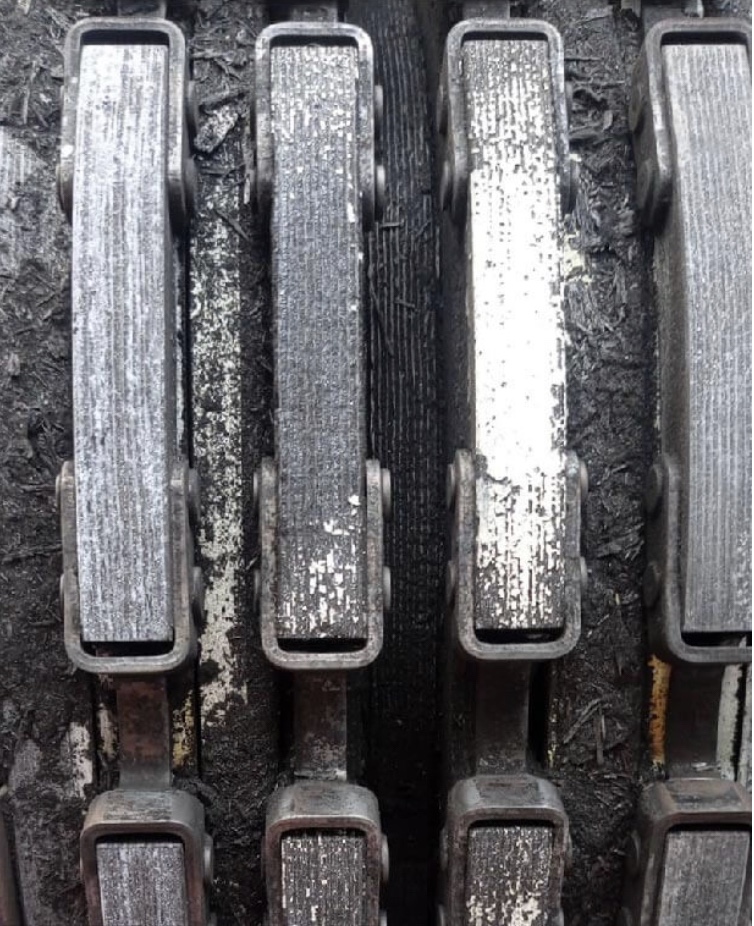
Under normal circumstances the oxidation takes place with a very slow rate and becomes accelerated due to high temperatures after landing or during long time taxiing, carbon from these brakes naturally combines with oxygen from the ambient air to become carbon dioxide CO2 which causes loss of carbon mass from the brake disks and thus leads to brake rupture and loss of braking due to damaging the brake pistons, leakage of the hydraulic fluid causing smoke and fire if the fluid is in contact with the hot part of the wheel due to vaporize phenomena and characteristics.
Types of oxidations :
1- Catalytic oxidation: generally caused by contact with the de-icing or cleaning fluids used to remove the ice from other aircrafts or runways as de-icing fluid is made from sodium or potassium, causing significant brake temperature reduction.
2- thermal oxidation: it happens due to high brake temperature after landing or taxi. Thermal oxidation affects all of the braking disks especially the middle disk which takes a longer time to cool down, higher temperature makes the brakes more prone to thermal oxidation effects.
By Captain/ Ahmed shebl
Discover more from Egyptianaviators
Subscribe to get the latest posts sent to your email.
 Egyptianaviators